

What to Know If Your Period Is 3 Days Late
At Pacific Women’s Center, Dr. Richard A. Beyerlein, MD, CPI, FACOG, and Dr. Tamara A. Stenshoel, MD, FACOG, understand that a period being three days late can raise questions and concern. In many cases, short delays are caused by factors like stress, hormonal fluctuations, or changes in diet and exercise. However, if irregularities persist or are accompanied by other symptoms, scheduling a consultation can help identify underlying causes and provide peace of mind. For more information, contact us or schedule an appointment online. We are located at 911 Country Club Rd. Suite 222 Eugene, OR 97401.
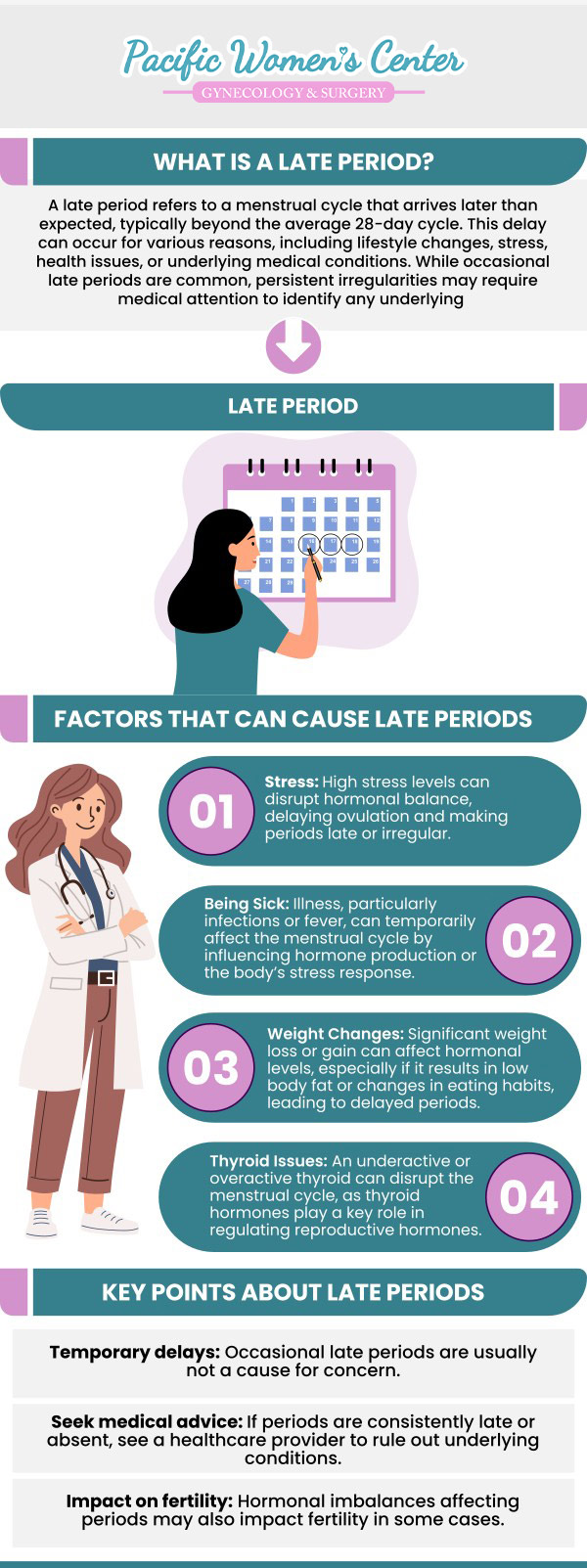
Table of Contents:
Is it normal for my period to be 3 days late?
Can stress cause my period to be delayed by a few days?
Does being 3 days late mean I could be pregnant?
How long should I wait before taking a pregnancy test?
When Your Period Is 3 Days Late: What to Know from Dr. Richard A. Beyerlein and Dr. Tamara.
It’s completely normal to feel concerned when your period is a few days late, but in most cases, a delay of three days is not unusual and isn’t typically cause for alarm. At Pacific Women’s Center, we want our patients to know that menstrual cycles can naturally vary from month to month—even for those who usually have regular periods.
A variety of everyday factors can influence your cycle. Stress, changes in diet or exercise routines, travel, illness, and hormonal fluctuations all play a role in the timing of your period. Shifts in weight, disrupted sleep patterns, or underlying medical conditions such as polycystic ovary syndrome (PCOS) or thyroid disorders can also contribute to delayed periods.
If you are sexually active, it’s important to consider pregnancy as a possibility, even with just a slight delay. Taking a home pregnancy test can help provide answers if this is a concern for you.
Generally, a period that is just a few days late is not a sign of a serious health issue. However, at Pacific Women’s Center, we encourage you to contact our team if your period is more than a week late, if you’re experiencing severe pain, unusually heavy bleeding, or any other worrisome symptoms. Our caring providers are here to answer your questions, evaluate your symptoms, and ensure your reproductive health is supported.
At Pacific Women’s Center, we understand that many factors can affect your menstrual cycle—including stress. Both physical and emotional stress can lead your body to release higher levels of hormones like cortisol. These stress hormones may interfere with the hypothalamus, the part of your brain that helps regulate your menstrual cycle. When this happens, ovulation can be delayed, which may cause your period to arrive later than usual.
A delay of a few days is common and is usually not cause for concern. However, ongoing or severe stress can sometimes result in longer delays or even missed periods. If you notice that your periods are frequently irregular or delayed, or if you have other symptoms that concern you, our team at Pacific Women’s Center is here to help. Our compassionate providers can help you identify the underlying causes and work with you to develop a plan for your reproductive health and overall well-being.
At Pacific Women’s Center, we understand that a late period can be concerning. If your period is three days late, pregnancy is one possible explanation—especially if you are sexually active and not using contraception. However, a late period is not a definitive sign of pregnancy. Menstrual cycles can vary from month to month due to stress, illness, changes in routine, travel, or natural hormonal fluctuations.
If you think you might be pregnant, consider whether you are experiencing other early pregnancy symptoms, such as breast tenderness, nausea, fatigue, or increased urination. Keep in mind, though, that these symptoms can also occur before your period.
The most reliable way to find out if you are pregnant is to take a home pregnancy test. These tests detect the hormone hCG and can generally provide accurate results from the first day of a missed period.
If your home pregnancy test is negative and your period still hasn’t started after a week, or if you have any concerns about your menstrual cycle, we encourage you to schedule an appointment at Pacific Women’s Center. Our caring team is here to answer your questions, provide testing, and support you with personalized women’s health care.
Your health and peace of mind matter to us.
If you think you might be pregnant, knowing when to take a pregnancy test is important for getting accurate results. At Pacific Women’s Center, we want to support you with reliable information and compassionate care during this important time.
Pregnancy tests work by detecting the hormone human chorionic gonadotropin (hCG) in your urine. Your body begins producing hCG after a fertilized egg implants in the uterus, which usually happens about six to twelve days after ovulation and fertilization.
Most home pregnancy tests recommend waiting until the first day of your missed period before testing. By then, if you are pregnant, your body should have produced enough hCG for the test to detect. While some tests claim to provide accurate results a few days before your expected period, testing too soon may lead to a false negative because hCG levels might still be too low.
If you take a test early and get a negative result but still suspect you may be pregnant, try testing again in a few days. hCG levels double every two to three days in early pregnancy, which increases the accuracy of the test as time passes. For the most reliable results, use the first urine of the morning, when hCG concentration is highest.
Dr. Richard A. Beyerlein and Dr. Tamara A. Stenshoel understand that menstrual changes can cause concern. A three-day delay is often harmless and linked to common triggers like stress, travel, or slight hormonal shifts. They provide thorough assessments to help women understand their bodies and maintain balanced reproductive health. For more information, contact us or schedule an appointment online. We are located at 911 Country Club Rd. Suite 222 Eugene, OR 97401. We serve patients from Eugene OR, Springfield OR, Coburg OR, Creswell OR, Cottage Grove OR, Lowell OR, Junction City OR, and surrounding areas.
Check Out Our 5 Star Reviews


ADDITIONAL SERVICES YOU MAY NEED
❱ Abdominal Hysterectomy
❱ Cervical Cone Biopsy
❱ Colposcopy
❱ Endometrial Ablation
❱ Endometrial Biopsy
❱ Female Sexual Dysfunction
❱ Gynecological Surgery
❱ Gynecology
❱ Hormone Therapy
❱ Vaginal Hysterectomy
❱ Endometriosis Diagnosis & Care






 Send Text
 How May I Help You?